
Women’s Rights in India Since 1950: Constitutional Promise, Legal Progress, and the Reality on Ground
New Delhi | January 24, 2026
More than seven decades after the Indian Constitution came into force, the status of women in the country reflects a complex mix of significant legal progress and persistent social challenges. Women’s rights in India since 1950 have evolved through constitutional guarantees, landmark laws, and judicial interventions that sought to correct historical inequalities. Yet, the gap between legal intent and lived reality continues to raise critical questions about implementation, awareness, and social change.
Constitutional Foundation of Women’s Rights
The adoption of the Constitution in 1950 marked a decisive shift in the legal position of women. At a time when many societies still denied women equal status, India’s founding document laid down an explicit framework for gender equality. Article 14 guaranteed equality before the law, while Article 15 prohibited discrimination on the basis of sex and permitted the State to take affirmative action for women and children. Article 21 further expanded the scope of women’s rights by protecting life, personal liberty, and dignity.
These constitutional provisions became the backbone of women’s rights in India since 1950, enabling women to challenge discriminatory practices in courts and seek institutional remedies. Over time, Parliament and the judiciary built upon this framework to address emerging forms of inequality and violence.
Expansion of Legal Protections

Several landmark legislations translated constitutional principles into enforceable rights. The Protection of Women from Domestic Violence Act, 2005, was a turning point, as it recognised not only physical abuse but also emotional and economic violence within households. This broadened understanding of domestic abuse reflected a more nuanced approach to women’s lived experiences.
Similarly, the Sexual Harassment of Women at Workplace (Prevention, Prohibition and Redressal) Act, 2013, institutionalised safeguards against workplace harassment. The law drew directly from the Supreme Court’s Vishakha Guidelines, underscoring the judiciary’s role in shaping women’s rights in India since 1950. Another significant judicial development came in 2017, when the Supreme Court struck down the practice of instant triple talaq, affirming Muslim women’s constitutional rights and personal liberty.
Political Participation and Representation
Political inclusion has been another major area of reform. The 73rd and 74th Constitutional Amendments in 1992 reserved around 33 per cent of seats for women in Panchayats and municipalities, leading to a visible increase in women’s participation at the grassroots level. Millions of women entered local governance, often for the first time, altering the dynamics of rural and urban administration.
A historic milestone was achieved with the 106th Constitutional Amendment Act of 2023, which provides for approximately 33 per cent reservation for women in the Lok Sabha and State Legislative Assemblies. While its full impact will unfold over time, the amendment represents a major advance in women’s rights in India since 1950, signalling intent to correct long-standing gender imbalances in national politics.
Education, Economy, and Social Mobility
India has also witnessed steady improvement in female literacy, school enrolment, and access to higher education. Women are increasingly visible in professional fields such as medicine, law, engineering, and management. Government schemes focused on education, skill development, and entrepreneurship have expanded economic opportunities for women across regions.
However, economic empowerment remains uneven. Women’s participation in the labour force is still low compared to global standards, and wage gaps persist across sectors. These disparities highlight structural barriers that laws alone have not been able to dismantle.
Persistent Gaps and Contemporary Challenges
Despite strong legal and constitutional frameworks, implementation remains a critical concern. Many women, particularly in rural and marginalised communities, are unaware of their rights. Gaps in police responsiveness, judicial delays, and limited institutional sensitivity continue to weaken enforcement. Recent judicial observations have also pointed to lower female literacy and workforce participation, along with underrepresentation in Parliament, despite progressive laws.
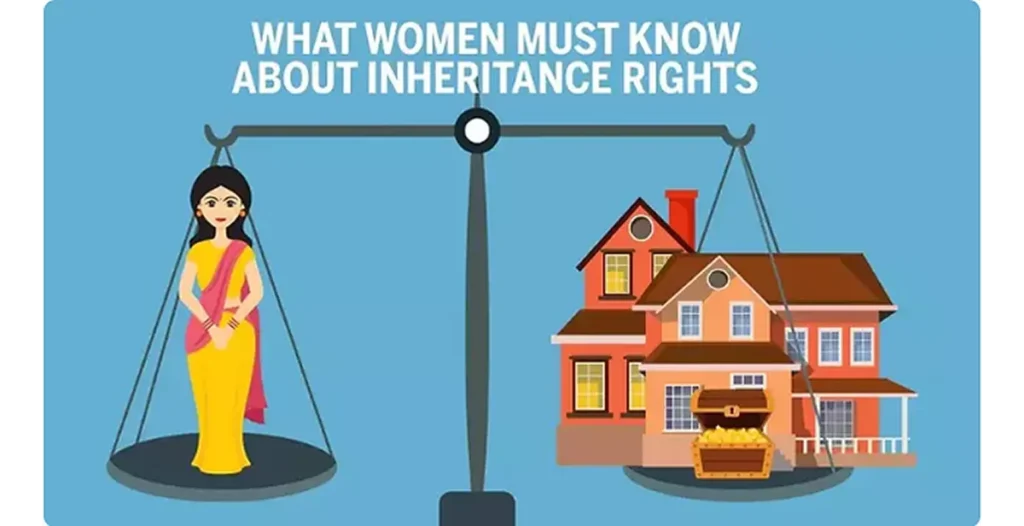
Socio-cultural norms further complicate the picture. Practices such as dowry, son preference, and pressure on women to forgo inheritance persist despite being illegal. Safety in public spaces remains a major issue, with crimes against women affecting mobility, education, and employment choices. Intersectional barriers mean that Dalit, tribal, minority, and disabled women often face compounded discrimination.
From Legal Promise to Lived Equality
In assessing women’s rights in India since 1950, the trajectory is one of undeniable progress tempered by enduring challenges. The Constitution and subsequent laws have transformed the legal and institutional landscape, empowering millions of women with rights, representation, and avenues for justice. Yet, societal attitudes, enforcement gaps, and economic inequalities continue to limit full equality.
As India moves forward, the challenge lies not in creating new rights, but in ensuring that existing ones translate into everyday reality. The journey from constitutional promise to substantive equality remains ongoing, demanding sustained political will, institutional reform, and social change.